Home / Nuclear / The fuel cycle
The fuel cycle
Fusion fuel is made at Saturn. Fission fuel is carried in, a few kilograms at a time, and never leaves.
See it in the tour: chapter kraken shore, shot 4.3.
Two fuels, two supply lines
The fusion fuel is local. Deuterium comes out of ice (Deuterium from ice) and helium-3 out of Saturn's gas (Helium-3 from Saturn) design. The fission fuel is not. There is no uranium mine at Saturn, so every reactor in the fleet runs on fuel carried from the inner system fiction.
Natural uranium is 0.7% uranium-235 physics. Reactor fuel is enriched. High-assay low-enriched uranium sits between 5% and 20%, and weapons-grade starts near 90% physics. The United Nations principles for nuclear power in space, adopted in 1992, say a space reactor shall use only highly enriched uranium-235. They allow nuclear power only where a mission cannot reasonably run on anything else, and they bar a reactor from being made critical before it reaches its operating orbit or trajectory. They are guidance, not treaty law. At Saturn the Sun is 1% as bright as at Earth, and the Gateway alone would need nearly half a square kilometre of solar panels to make 2 MW physics. The fuel cartridges ride out cold and unstarted design.
What actually burns
A neutron splits a uranium-235 nucleus, and the pieces and two or three more neutrons fly out.
n + ²³⁵U → ¹⁴¹Ba + ⁹²Kr + 3 n
Bonds broken: none. Bonds formed: none.
- 10⁻¹⁴ m A neutron splits a nucleus
Energy per fission is about 200 MeV, most of it the kinetic energy of the fragments, so one kilogram of uranium-235 fissioned completely gives 8.2 × 10¹³ J physics. The fleet's reactors need very little.
- The Gateway shuttle's reactor runs at 929 MW. A full methane load lasts 67.5 minutes of burn and fissions 46 g design.
- The cargo tug's reactor runs at 5.8 MW for a 120-day trip and fissions 0.73 kg design.
- The Gateway's 8 MW unit fissions 3.1 kg in a year design.
Those are kilograms that split. A core holds much more than it burns, and the loaded mass is not in the vehicle data. Set the three beside the Long Passage. A crossing's energy would fission about 1,600 kg of uranium-235, against 371 kg of deuterium and helium-3 physics. See Energy per kilogram.
Refuelling
A reactor is refuelled by swapping sealed core cartridges, not by pouring fuel in design. The cartridges arrive on the fusion transports that carry the settlers fiction. Nothing is reprocessed at Saturn design.
Spent fuel
Fission leaves fragments, and the fragments are radioactive. Two of the long-lived ones are caesium-137, with a half-life of 30.17 years, and strontium-90, with 29 years physics. After ten half-lives, about 300 years, the activity of either is a thousandth of what it was physics.
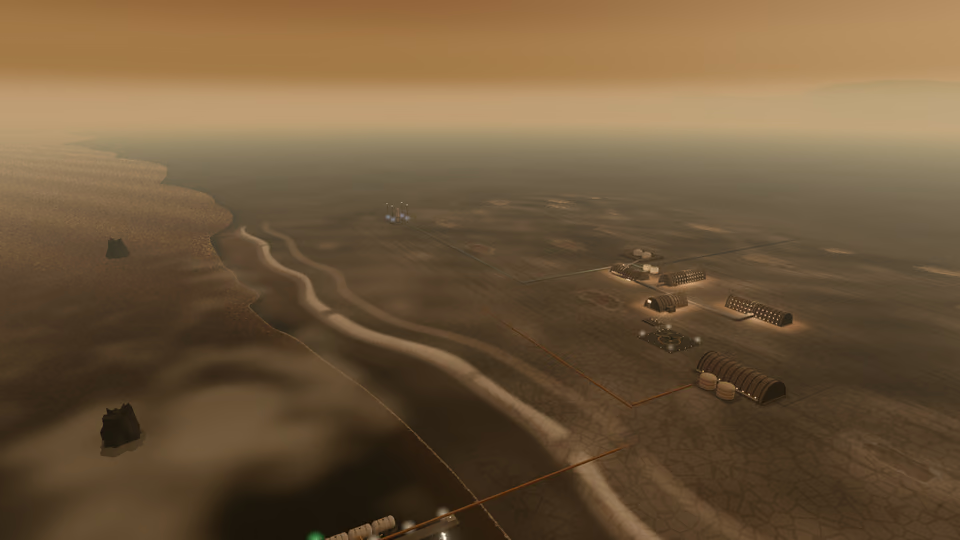
The settlement does not send spent cartridges home and does not dump them. They go into a shielded vault in the reactor yard, behind the berm and away from the halls design. See Reactors and heat on Titan and, for how a shield is sized, Shadow shields and neutrons.
Key numbers
| Quantity | Value | Basis |
|---|---|---|
| Uranium-235 in natural uranium | 0.7% | physics |
| High-assay low-enriched uranium | 5% to under 20% | physics |
| Energy per fission | about 200 MeV | physics |
| Uranium-235 fissioned completely | 8.2 × 10¹³ J/kg | physics |
| Shuttle, one full methane burn | 46 g, at 929 MW for 67.5 min | design |
| Tug, one 120-day trip | 0.73 kg, at 5.8 MW | design |
| Gateway, one year | 3.1 kg, at 8 MW | design |
| Long Passage crossing as fission | about 1,600 kg | physics |
| Caesium-137 / strontium-90 half-life | 30.17 y / 29 y | physics |
| Space reactor rules, UN 1992 | highly enriched U-235, not critical before orbit | law |
Sources
- UN General Assembly resolution 47/68, Principles relevant to the use of nuclear power sources in outer space (1992)
- World Nuclear Association, Uranium enrichment
- US DOE, What is high-assay low-enriched uranium (HALEU)?
- US EPA, Radionuclide basics, cesium-137
- US EPA, Radionuclide basics, strontium-90
- US DOE Fundamentals Handbook, Nuclear Physics and Reactor Theory (DOE-HDBK-1019/1-93)